
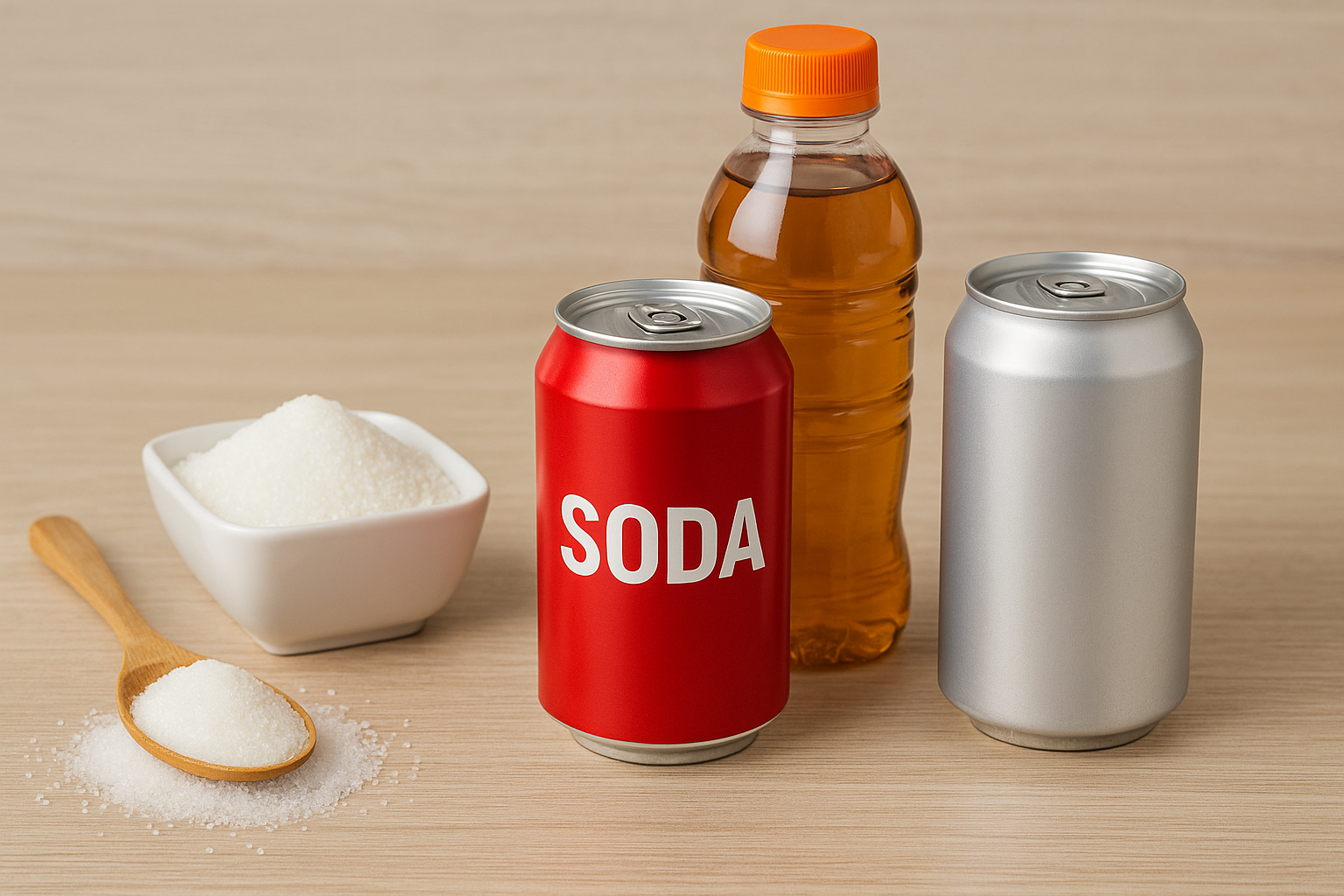
🎯 Purpose and Objectives of the Sugar Tax
In recent years, several European countries have introduced a sugar tax on beverages to reduce sugar consumption, combat obesity, and encourage product reformulation.
In France, this measure — officially called the tax on drinks containing added sugars or sweeteners — has become a key public health tool.
The principle is simple: the more sugar a drink contains, the higher the tax.
This system motivates producers to lower sugar levels and encourages consumers to make healthier choices.
🇫🇷 The Sugar Tax in France
💶 Mechanism and Tax Rates
As of 2025, France applies a progressive sugar tax system:
- ≤ 5 kg of added sugar per hectoliter (hl) – €4/hl
- Between 5 and 8 kg/hl – €21/hl
- Over 8 kg/hl – €35/hl
In practice, this can lead to an average price increase of around 10%, depending on sugar content.
Studies indicate a 3% drop in consumption of sugary beverages, along with a strong trend toward recipe reformulationby major brands.
🏭 Impact on Producers
Manufacturers must now adapt recipes, labeling, and production processes to meet the new tax thresholds.
For many, this means additional costs related to R&D, ingredient sourcing, and quality control — but also an opportunity to reposition products as healthier and more sustainable.
🌍 The Situation Across the European Union
France is not alone in its approach. Several EU countries have implemented their own versions of a sugar tax:
- Ireland – applies to drinks with more than 5 g of sugar per 100 ml
- United Kingdom – uses a similar tiered system based on sugar content
- Belgium – flat rate of €0.068/L, significantly lower than France
- Portugal & Finland – include energy drinks in their sugar tax schemes
France stands out as one of the most stringent systems in Europe, with clearly defined thresholds and higher rates for highly sweetened beverages.
✅ Results and Challenges for the Industry
📉 Positive Outcomes
- Average 10% reduction in sugar content across soft drinks (2016–2022)
- Decrease in sales of high-sugar beverages
- Growing popularity of sugar-free and low-calorie alternatives
⚠️ Industry Challenges
- Partial transfer of the tax cost to retail prices
- High costs associated with reformulation and testing
- Uncertainty regarding the long-term public health impact
🔎 Conclusion: A European Shift Toward Healthier Beverages
France exemplifies how fiscal policy can effectively support public health objectives by encouraging lower-sugar beverage production.
Although approaches vary between countries, the goal is shared across Europe — to promote more responsible consumption and production.
For brands and beverage manufacturers, this means:
- closely monitoring tax thresholds,
- reformulating products to reduce sugar content,
- adapting marketing strategies to highlight natural and health-oriented products.
💬 Summary and Canetra’s Commitment
At Canetra, we actively monitor changes in European beverage regulations.
Our sustainable and innovative packaging solutions — aluminum cans, PET, and glass bottles — help brands create healthier, compliant, and more eco-friendly beverages.